Scripted Ceramic Forms
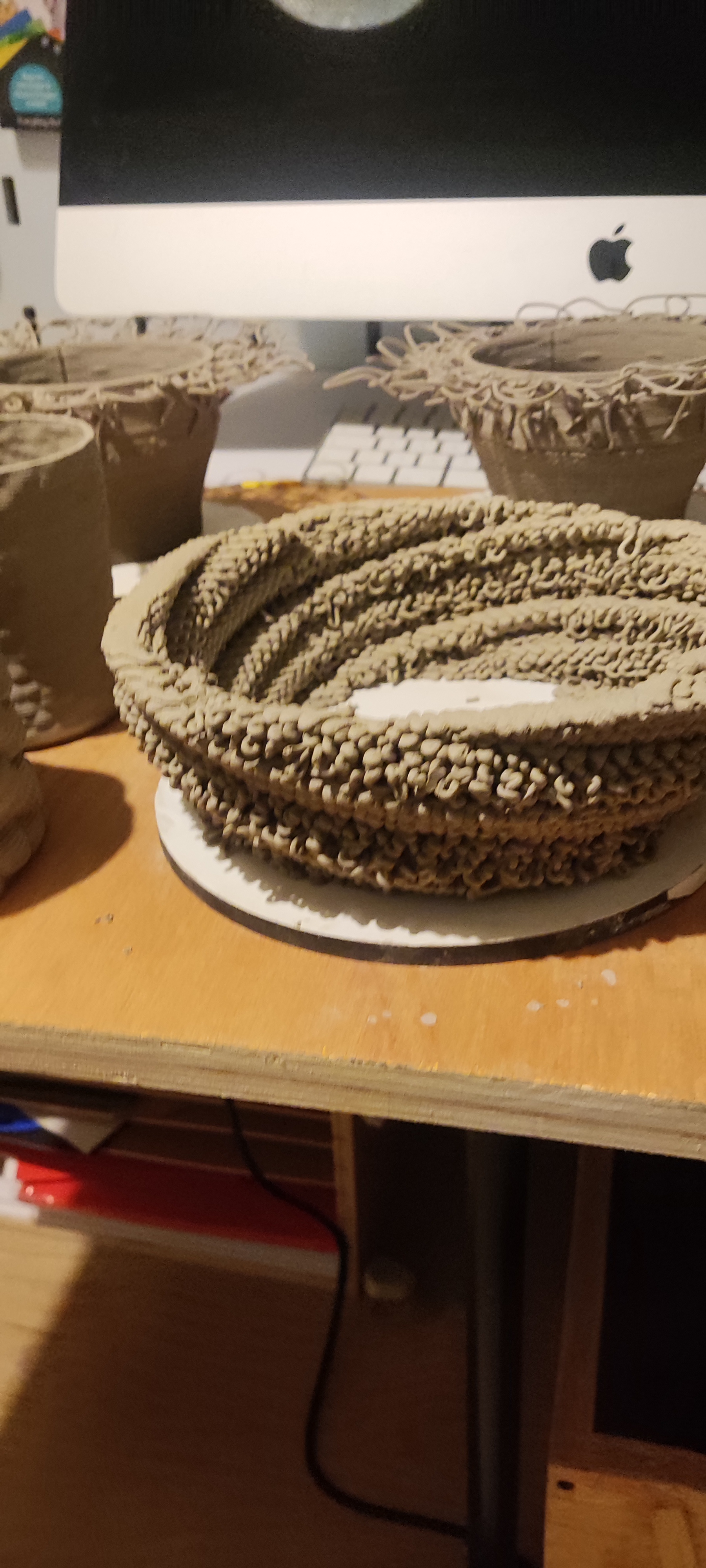
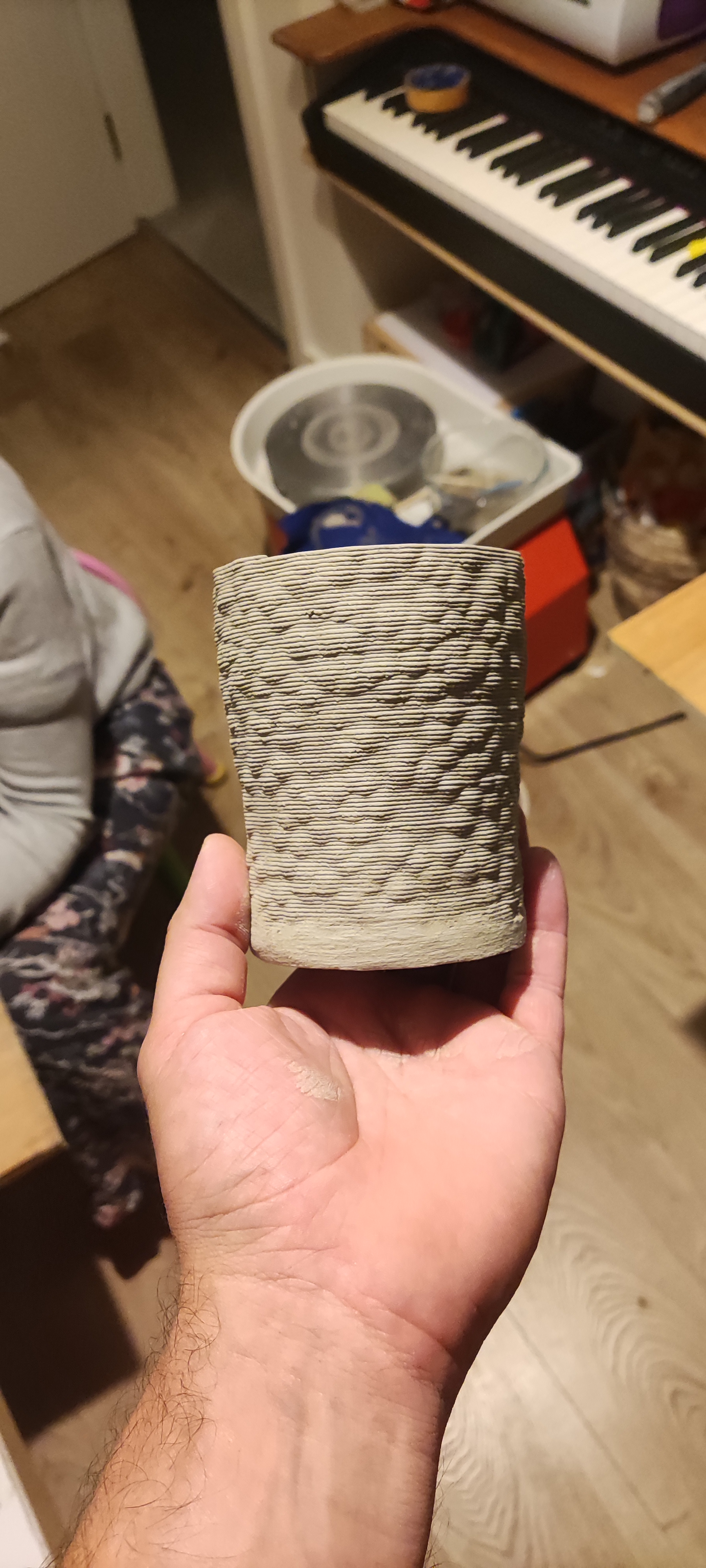
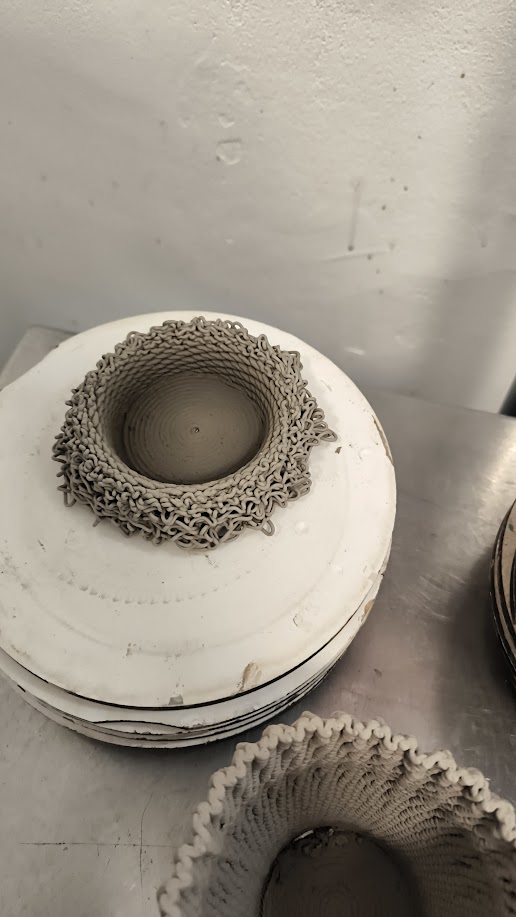
Algorithmic paths written in Python guide clay extrusion into coiled and rippled vessels.

- Type
- Ceramics & computation
- Status
- Ongoing experiments
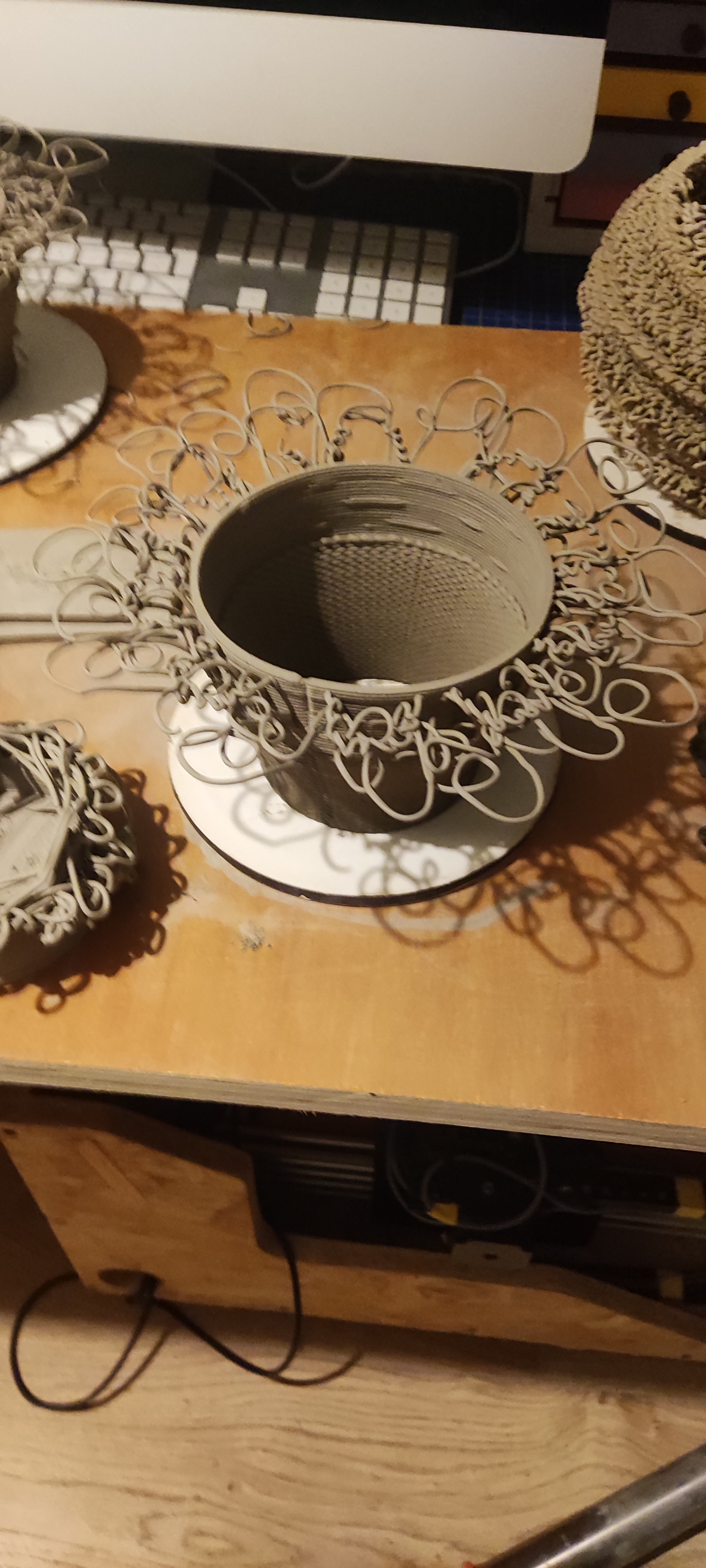
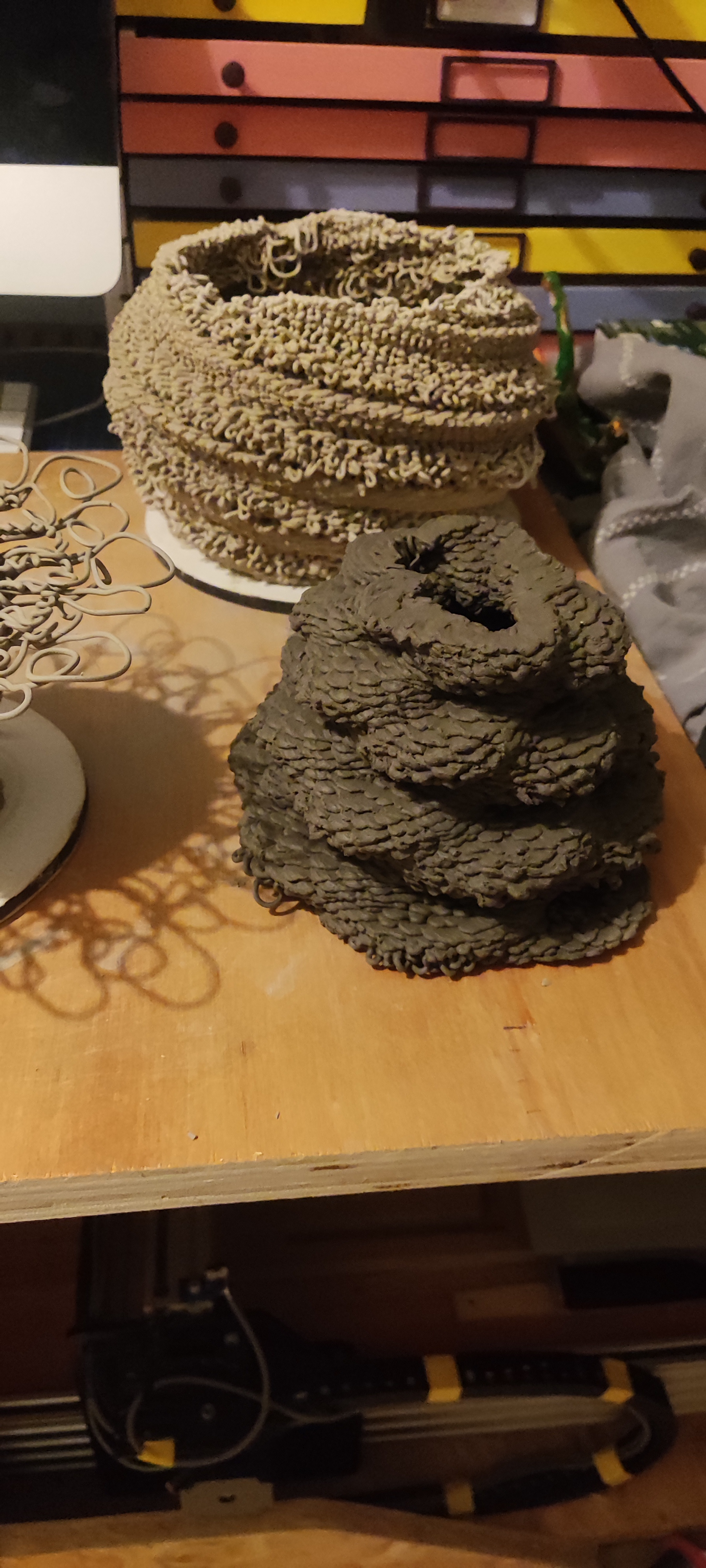
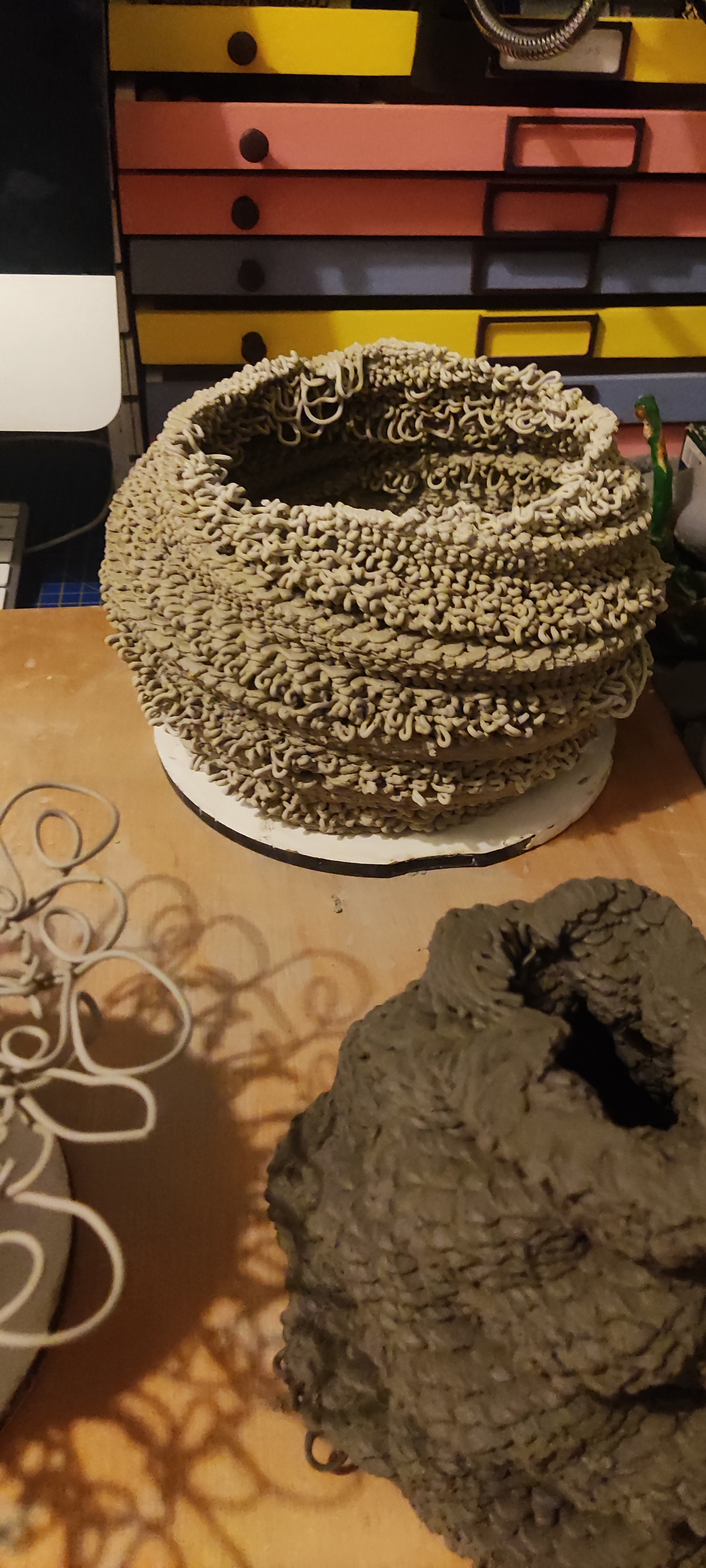
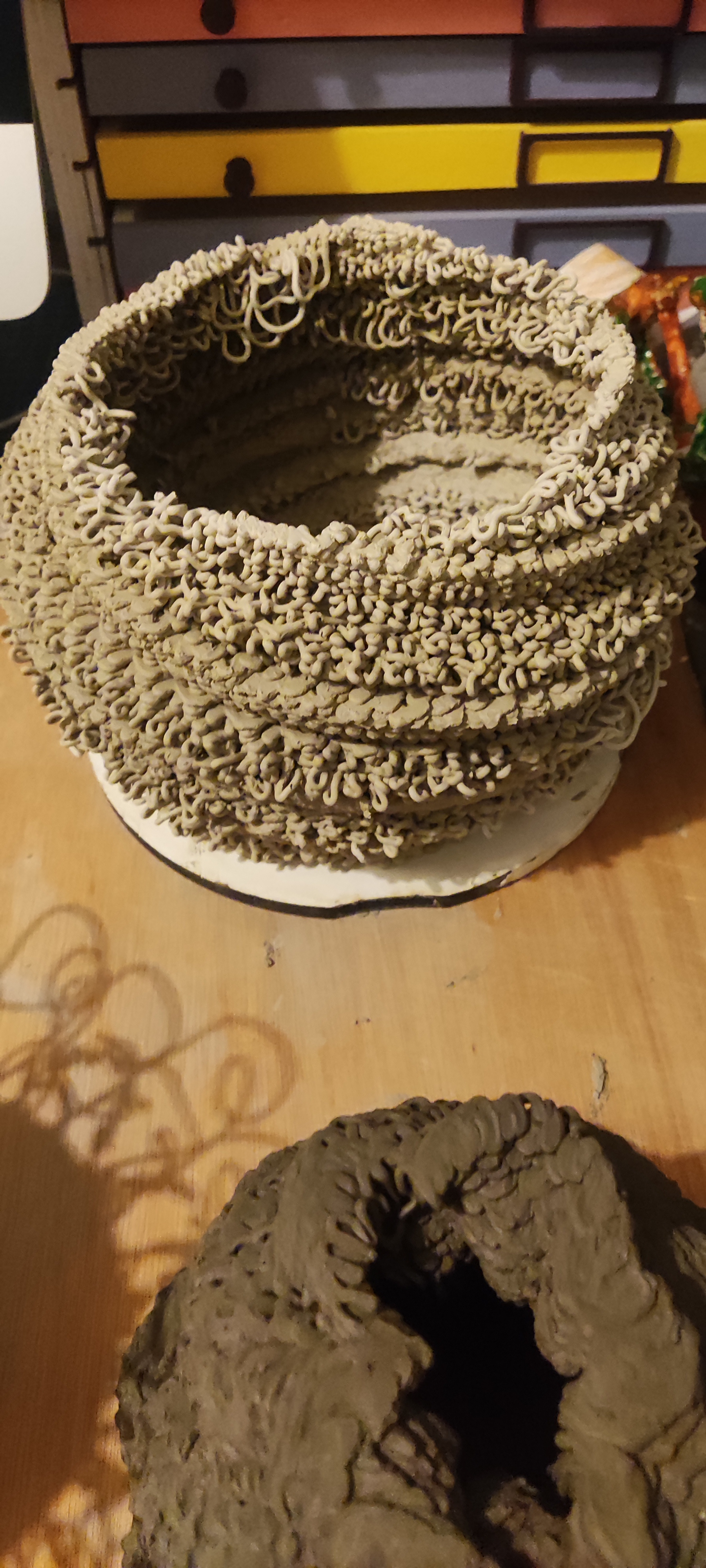
These experiments use Python in Blender to generate paths for clay extrusion. Adjusting the path changes the profile of the printed form, from regular ripples to more irregular surface variation.
The workflow moves from a script and a digital preview to G-code and a physical print. A set of controls brings recurring parameters together so that variations can be compared without rebuilding every experiment from scratch.
The clay is an active constraint. Layer height, moisture and changes in direction affect whether the form holds, bonds or slumps. Tests with twisting paths and non-planar layers examine where the digital possibility meets the material’s limits.
Credits
- Research and fabricationJose Luis Berna Moya

Next study
Laser-Drawn Glazes
Using a precision laser as a drawing tool, layering line work and colour between firings.